Hello, and welcome. Most things made for stroke survivors were either clinical, childish, or honestly, kind of boring, so I wanted to make something different. It started with a book built for adults, with real quotes paired with real activities, and grew to include trivia books, word searches, and playlists. Whether you are the stroke survivor or the one sitting beside them, I hope you find these useful.
Books
Tools
Music
Books
Each book was designed with one goal in mind, create something enjoyable, that was easy to handle, pick up and put down, and encouraged smiles and interaction.
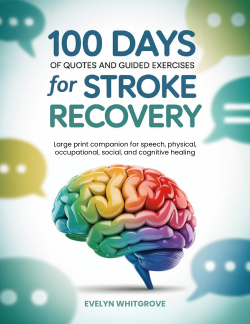
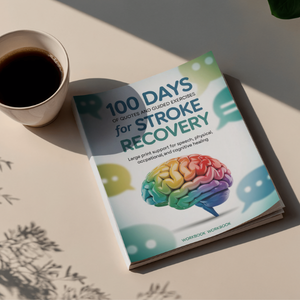
100 Days of Quotes and Guided Exercises for Stroke Recovery - Created with stroke survivors and caregivers in mind, this large-print, easy-to-use guide pairs inspiring quotes with simple, rehab-style activities — adding structure and encouragement to everyday recovery.
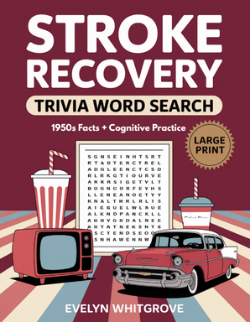
Stroke Recovery Trivia Word Search: 1950s Facts + Cognitive Practice - A fresh approach to stroke recovery and cognitive practice by pairing large print word search puzzles with short, familiar facts from the 1950s.
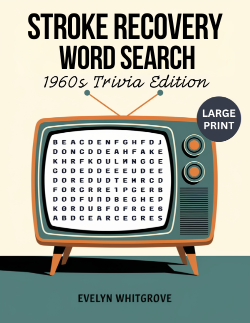
Stroke Recovery Word Search: 1960s Trivia Edition - Engaging trivia from the 1960s paired with large print word search puzzles—creating a recovery resource that feels adult, interesting, and rewarding to complete. Interspersed Looking Back, A Good Thing, and Did You Know? pages add variety.
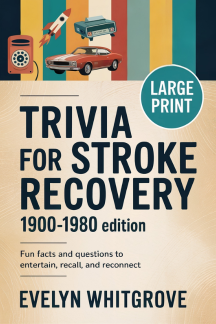
Trivia for Stroke Recovery: 1900-1980 Edition - Blends entertainment with gentle mental exercise. Each page features nostalgic questions from decades past—covering music, history, and everyday life—crafted to spark recall, laughter, and conversation.
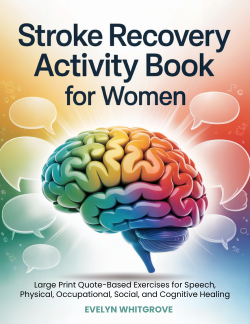
Stroke Recovery Activity Book for Women - Created as an encouraging guide for women navigating life after a stroke. Each of the 100 days pairs a large print quotation from inspiring women with a simple reflection or gentle activity designed to spark connection, confidence, and conversation.
Tools
The first weeks after a stroke are usually about the big, obvious things, regaining strength, relearning speech, getting through therapy sessions. But a lot of recovery (and living) happens at home, and that's often where tasks that used to be simple might be harder. Handwriting might look shakier than it used to. A pen that used to feel natural in the hand can suddenly feel like it's fighting back. Buttons take longer. A cup is difficult to handle.
A lot of that comes down to coordination, the connection between the brain and the hand that most people never think about until it's disrupted. The good news is that the brain can keep learning and adjusting well past the first weeks of recovery, and repetition helps rebuild that connection, a little at a time. That's part of why the activities in 100 Days of Quotes and Guided Exercises for Stroke Recovery are built the way they are. Every day is a small, repeated chance to practice.
None of that makes holding a pen any easier in the moment, though, and that's what the tools below are for. They don't do the recovering. They just take some of the physical fight out of the pen itself, so there's more room for the actual practice, whether that's today's page in the book, or writing a note.
Every hand is a little different, so instead of one generic recommendation, here's how to think about it. Start by loosening things up, then pick the tool that matches what's happening with the hand.
Warm Up First - A few minutes of squeezing and stretching Therapy Putty before picking up a pen loosens the hand and makes everything after this easier. It's a small step, but it's the one most people skip.
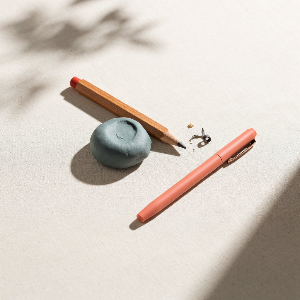
Start With Jumbo Pencils — The Jumbo Pencils wide barrel means a weaker or less coordinated grip doesn't have to work as hard just to hold on. For a lot of hands, this alone makes writing easier.
Or Try a Smooth Gel Pen — A Sharpie 0.7 Gel pen writes cleanly without much pressure, which matters when tremors make heavier pressure hard to control.
Then, Add What The Hand Needs — Whichever pencil or pen you're using, here's how to adapt it further.
If the Main Problem Is Grip Weakness — The Pencil Grip Original repositions the fingers into a more natural hold, so a hand relearning fine motor control doesn't have to fight the pen itself to write. Slides onto almost any pencil or pen.
If the Main Problem Is Tremors or Shaking — A weighted pen, like the Tenare Weighted Pen, steadies the hand in a way a normal light pen can't. The extra weight in the barrel does the work.
If It's More General Grip and Control — An adaptive grip, like the Sammons Preston Universal Cuff or Foam Tubing slides onto a pencil or pen and gives the hand something more to hold onto
Try a few and let me know which works for you.
Music
Music can take you back in time, reviving memories. That same pull shows up in stroke recovery too. A word that's gone quiet can surface mid-lyric. A stiff hand can loosen enough to tap along without thinking. Moods can lift and smiles return.
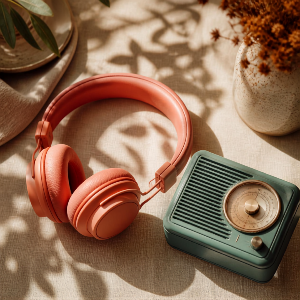
That's the idea behind these five playlists, five ways to add a little enjoyment to the day. Most of the songs come from the sixties, seventies, and eighties, fan favorites every one. Kitchen Dance Party is full of upbeat, fun songs for when it's groove time, Background Company includes quiet strings and piano, Front Porch Sing-Along features favorites worth singing along to, Slow Dance in the Living Room offers slow love songs, and For the Quieter Days is a playlist full of soft songs for whatever kind of quiet the day calls for.
The book gives you something to do each day. The tools make holding the pen a little easier. This is the last piece, something to listen to.
Leave your email below and I'll send the five playlists to your inbox.
The playlists are on the way to your inbox. Enjoy!
- Evelyn